


Build on Naara: API Keys, Signed Webhooks and Testing Safely
October 11, 2026 · Supreme Admin
How to connect your own tools to Naara: create a key, call the API, receive signed webhooks and verify them properly.
If you are building something on top of Naara, you want three things: a key you can revoke, events you can trust, and a way to test without spending real money.
Keys
Create an API key in your dashboard. A key belongs to your account or workspace, shows only a short preview after creation, and can be revoked at any time. Treat it like a password: keep it on your server, never in a web page or an app you ship.
Webhooks you can trust
When something happens, such as an order finishing or a message arriving, Naara can POST a JSON body to your address. Each delivery carries a timestamp and a **signature**, a HMAC of the timestamp and body made with your webhook secret. Your server should:
1. Recompute the signature from the raw body. 2. Compare it in constant time. 3. Reject deliveries whose timestamp is far in the past. 4. Treat a repeated event id as already handled.
If you skip step one, anyone who guesses your address can send you fake events.
Public addresses only
Webhook addresses must be https and reachable on the public internet. Addresses that point inside a private network are refused, which protects both of us. A webhook that keeps failing is switched off after ten failures in a row, and you can re-enable it once your server is healthy.
Retries
A failed delivery is retried with a growing delay. Answer with any 2xx status quickly and do the heavy work afterwards, so a slow handler never causes duplicates.
Test first
Use sandbox keys for providers and a test channel for messaging. For Respond, a Telegram bot and a web chat on a test page are enough to see the whole path, from message in to webhook out.
Common mistakes
- Parsing the JSON before checking the signature.
- Logging the secret.
- Doing slow work before answering.
- Forgetting that the same event can arrive twice.
Where to go next
The developer documentation lists every endpoint with example requests, and the guided tour of the developer dashboard shows where keys and webhooks live.
Questions people ask
**How do I rotate a key?** Create a new key, switch your server over, then revoke the old one. There is no downtime if you do it in that order.
**What status code should my webhook return?** Any 2xx means received. Anything else is retried with a growing delay.
**Can I replay an event?** Treat events as at-least-once: store the event id and ignore a repeat. That makes a replay safe.
Keep reading
-
 Developers & Integrations
Sell eSIMs on Your Own Website With Naara Widgets and the WordPress Plugin
Embed a Naara catalogue on your site, let visitors check out on a hosted page, and track every order, with or...
2 min read
-
 Naara Pro & Business
Broadcast Messages Done Right: Consent, STOP and What Channels Allow
A broadcast can build loyalty or burn your reputation. Here is how Respond handles consent, opt-outs and the r...
2 min read
-
 Money, Wallet & Pricing
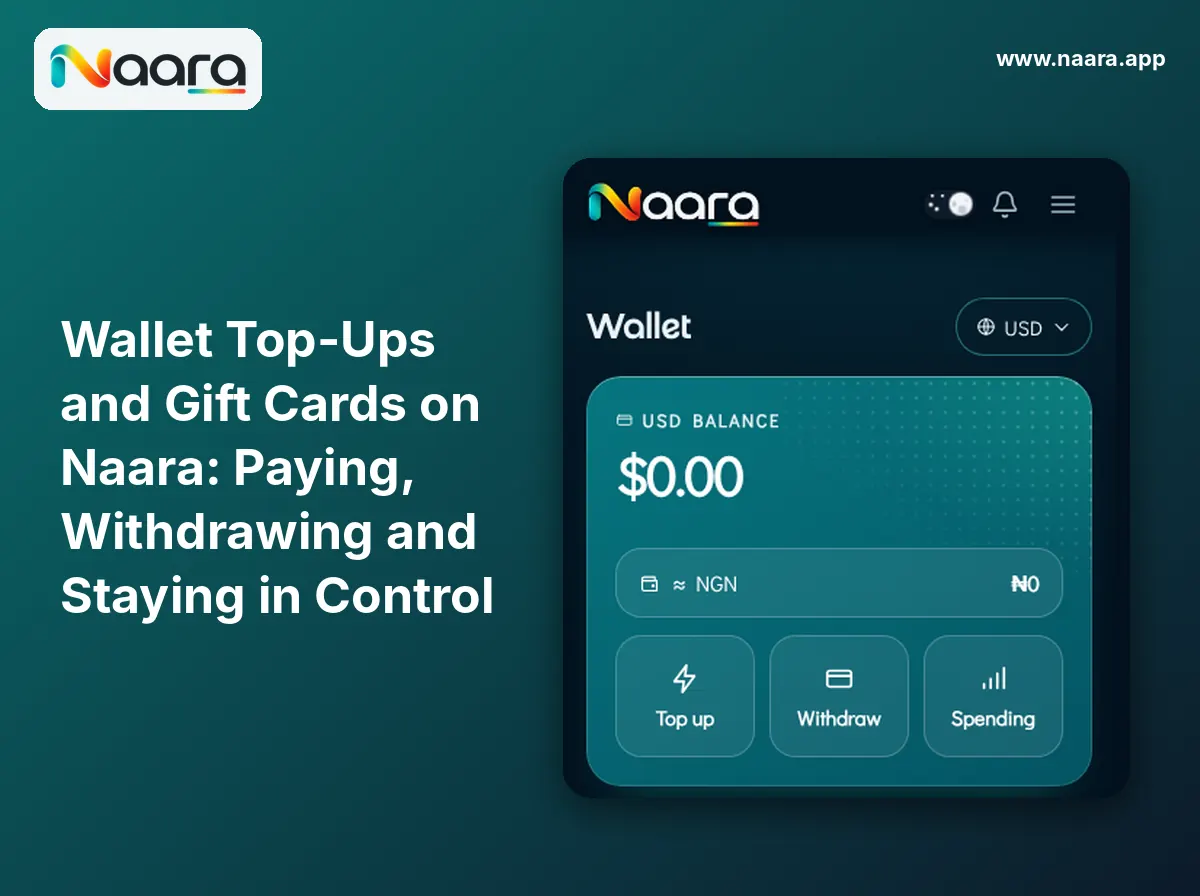
Wallet Top-Ups and Gift Cards on Naara: Paying, Withdrawing and Staying in Control
One wallet pays for everything. Here is how to top up, which payment methods you can expect, how to withdraw e...
2 min read
-
 Naara Chat & Community
Naara Chat Tips: Gestures, Status Updates and Other Things You Might Have Missed
A quick tour of the small features that make Naara Chat faster: swipe to reply, status updates with mentions,...
2 min read
-
 NaaraCredits & Loyalty
Earn NaaraCredits by Following Brands: How the Rewards Hunt Works
Follow a brand's real social pages, earn credits you can spend on chat and calls, and know exactly how it is c...
2 min read
-
 Naara Chat & Community
Voice and Video Calls on Naara: What Makes a Call Connect (and Why TURN Matters)
Calls inside Naara are peer to peer when they can be and relayed when they must be. Here is what that means fo...
2 min read
Keep reading
-
Developers & Integrations
Sell eSIMs on Your Own Website With Naara Widgets and the WordPress Plugin
Embed a Naara catalogue on your site, let visitors check out on a hosted page, and track every order, with or...
2 min read
-
Naara Pro & Business
Broadcast Messages Done Right: Consent, STOP and What Channels Allow
A broadcast can build loyalty or burn your reputation. Here is how Respond handles consent, opt-outs and the r...
2 min read
-
Money, Wallet & Pricing
Wallet Top-Ups and Gift Cards on Naara: Paying, Withdrawing and Staying in Control
One wallet pays for everything. Here is how to top up, which payment methods you can expect, how to withdraw e...
2 min read
-
Naara Chat & Community
Naara Chat Tips: Gestures, Status Updates and Other Things You Might Have Missed
A quick tour of the small features that make Naara Chat faster: swipe to reply, status updates with mentions,...
2 min read
-
NaaraCredits & Loyalty
Earn NaaraCredits by Following Brands: How the Rewards Hunt Works
Follow a brand's real social pages, earn credits you can spend on chat and calls, and know exactly how it is c...
2 min read
-
Naara Chat & Community
Voice and Video Calls on Naara: What Makes a Call Connect (and Why TURN Matters)
Calls inside Naara are peer to peer when they can be and relayed when they must be. Here is what that means fo...
2 min read