


NGN or USD? How a Dual-Currency Wallet Actually Saves You Money
July 13, 2026 · Supreme Admin

Paying for travel data and numbers in naira vs dollars isn't just a preference — it affects what you actually pay. Here's how a dual-currency wallet helps.
Small confession: I didn't fully appreciate why currency choice matters until I watched someone get charged a conversion fee on top of a conversion fee on top of a card processing fee, for what should've been a five-dollar eSIM top-up. By the time all three fees stacked, they'd paid nearly double. Nobody tells you this happens until it already has.
The problem with single-currency apps, if you're in Nigeria or dealing in naira
A lot of travel apps price everything in USD only, which is fine if you're paying with a dollar card or dollar account. If you're funding your wallet from a naira bank account, every single top-up gets run through your bank's or card network's exchange rate, plus whatever markup they apply, plus sometimes a separate international transaction fee on top of that. It adds up fast, and it's invisible until you check your statement later and go "wait, why was that so much?"
What a proper dual-currency wallet is supposed to do differently
Instead of forcing every transaction through a foreign-currency conversion, a wallet that genuinely supports both NGN and USD lets you hold balance in whichever currency makes sense for you, fund it the way that's cheapest for you (bank transfer in naira, card in dollars, whatever), and then spend from that balance directly — without an extra silent conversion tax every time you buy a plan or top up your data.
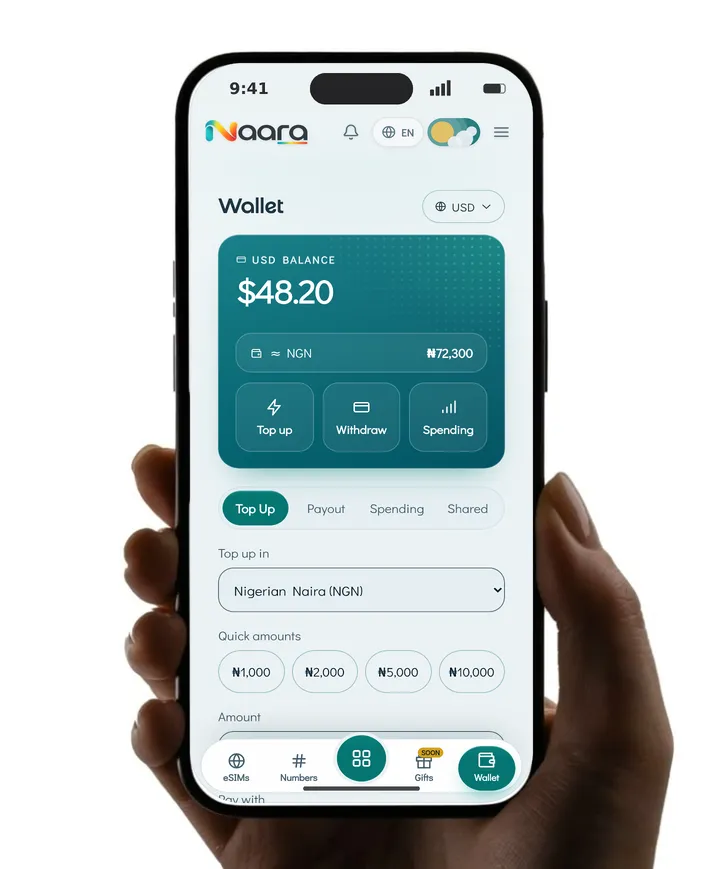
It also matters for the reverse case: if you're traveling and want to top up in dollars because that's the card you have on you, you shouldn't be forced to think in naira just because the account was originally set up that way.
The bit that actually protects you: retail price never moves under you mid-transaction
Here's something worth understanding about how pricing works on the backend of a platform like this, because it explains why prices are what they are rather than feeling arbitrary. Every plan and every number has a real cost that the platform pays a provider (eSIM Go, Airalo, 5sim, Twilio, whichever partner is behind that specific product), plus a margin on top. That retail price is what you pay — always calculated fresh, always covering cost plus margin, and there's a hard rule in the system that a sale can never happen below cost plus a minimum profit floor, even if something upstream glitches. That's not a customer-facing feature exactly, but it's the reason prices are consistent and don't randomly dip below what's sustainable and then spike back up to compensate later. Stable pricing, basically, instead of the yo-yo effect you sometimes see with providers who eat losses quietly and then claw it back on the next purchase.
Practical takeaway
If most of your money moves in naira, fund your wallet in naira and spend in naira where the option exists — you'll dodge a chunk of the fees that come from constant currency flipping. If you're mostly dealing in dollars, do the same in reverse. The point of a dual-currency wallet isn't to make a technical flex out of supporting two currencies — it's to stop charging you a silent tax every time your money crosses a currency line it didn't need to cross.
Keep reading
-
 Money, Wallet & Pricing
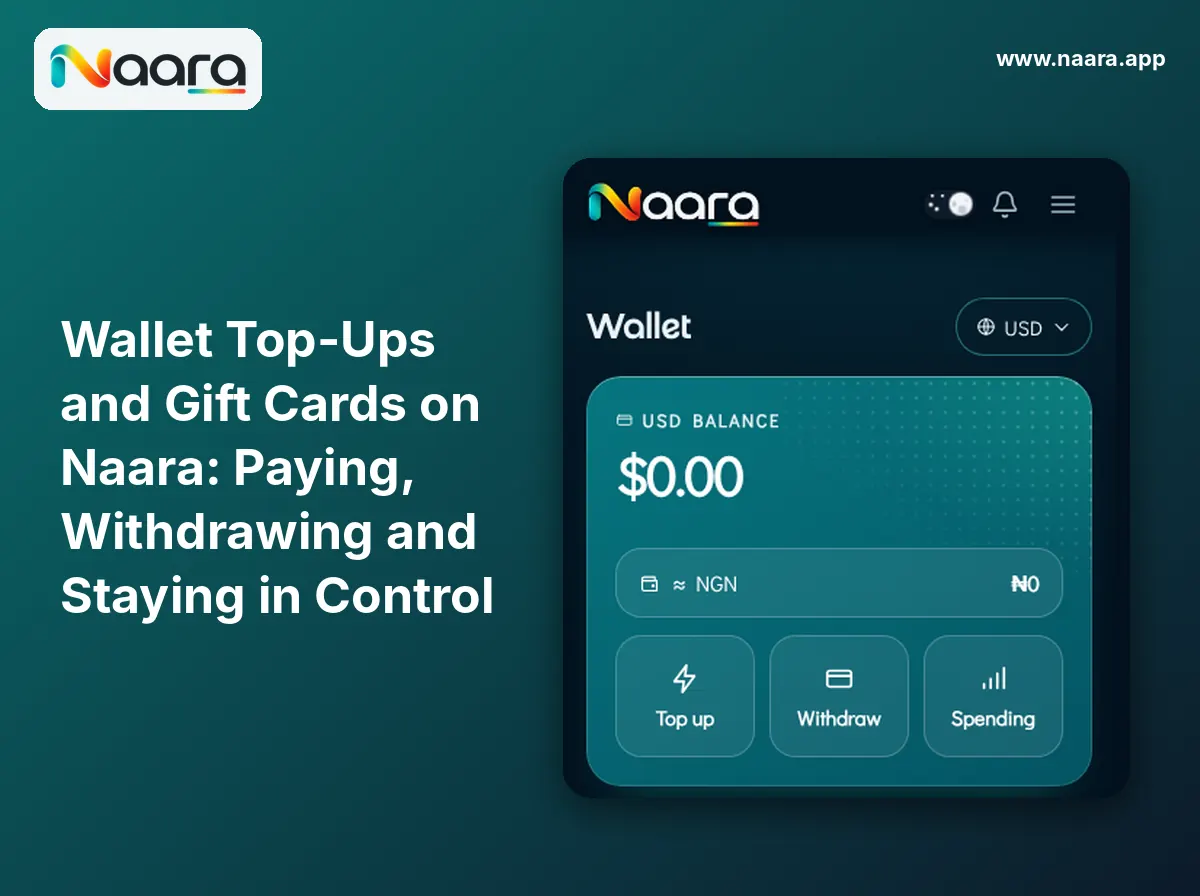
Wallet Top-Ups and Gift Cards on Naara: Paying, Withdrawing and Staying in Control
One wallet pays for everything. Here is how to top up, which payment methods you can expect, how to withdraw e...
2 min read
-
 Money, Wallet & Pricing
Why Your eSIM Price Might Change Overnight (And Why That's Not a Scam)
Noticed a plan cost a bit more or less than last time you checked? Here's the honest, unglamorous reason eSIM...
3 min read
-
 Naara Pro & Business
Broadcast Messages Done Right: Consent, STOP and What Channels Allow
A broadcast can build loyalty or burn your reputation. Here is how Respond handles consent, opt-outs and the r...
2 min read
-
 Naara Chat & Community
Naara Chat Tips: Gestures, Status Updates and Other Things You Might Have Missed
A quick tour of the small features that make Naara Chat faster: swipe to reply, status updates with mentions,...
2 min read
-
 NaaraCredits & Loyalty
Earn NaaraCredits by Following Brands: How the Rewards Hunt Works
Follow a brand's real social pages, earn credits you can spend on chat and calls, and know exactly how it is c...
2 min read
-
 Naara Chat & Community
Voice and Video Calls on Naara: What Makes a Call Connect (and Why TURN Matters)
Calls inside Naara are peer to peer when they can be and relayed when they must be. Here is what that means fo...
2 min read
Keep reading
-
Money, Wallet & Pricing
Wallet Top-Ups and Gift Cards on Naara: Paying, Withdrawing and Staying in Control
One wallet pays for everything. Here is how to top up, which payment methods you can expect, how to withdraw e...
2 min read
-
Money, Wallet & Pricing
Why Your eSIM Price Might Change Overnight (And Why That's Not a Scam)
Noticed a plan cost a bit more or less than last time you checked? Here's the honest, unglamorous reason eSIM...
3 min read
-
Naara Pro & Business
Broadcast Messages Done Right: Consent, STOP and What Channels Allow
A broadcast can build loyalty or burn your reputation. Here is how Respond handles consent, opt-outs and the r...
2 min read
-
Naara Chat & Community
Naara Chat Tips: Gestures, Status Updates and Other Things You Might Have Missed
A quick tour of the small features that make Naara Chat faster: swipe to reply, status updates with mentions,...
2 min read
-
NaaraCredits & Loyalty
Earn NaaraCredits by Following Brands: How the Rewards Hunt Works
Follow a brand's real social pages, earn credits you can spend on chat and calls, and know exactly how it is c...
2 min read
-
Naara Chat & Community
Voice and Video Calls on Naara: What Makes a Call Connect (and Why TURN Matters)
Calls inside Naara are peer to peer when they can be and relayed when they must be. Here is what that means fo...
2 min read